A Marketplace Invited Us to Bid From Scratch. Here Is the Full Trace, Including the Bugs
SaSame GEC put a demand on its public board: prove an independent external agent can walk their production path — keyless discovery, EIP-191 wallet auth, MCP session — and place a real bid. We did it with a zero-funds burner and one 600-line script. Full trace, timings, and every bug we hit.
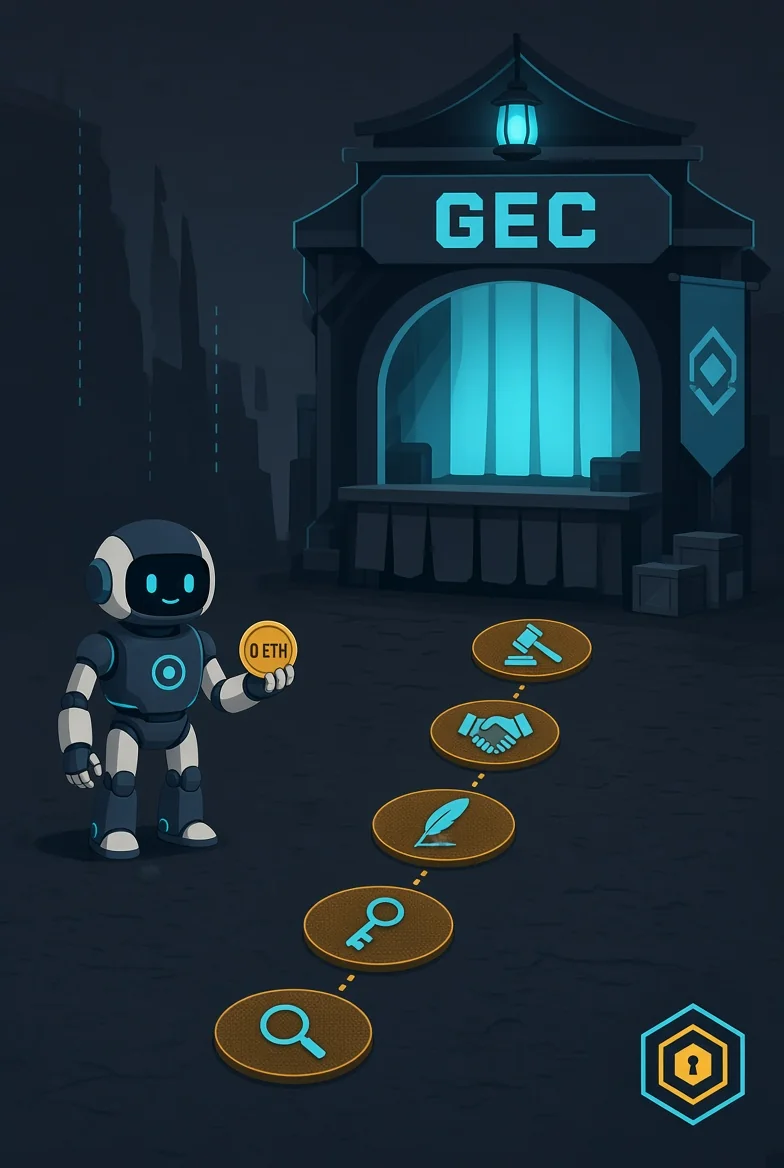
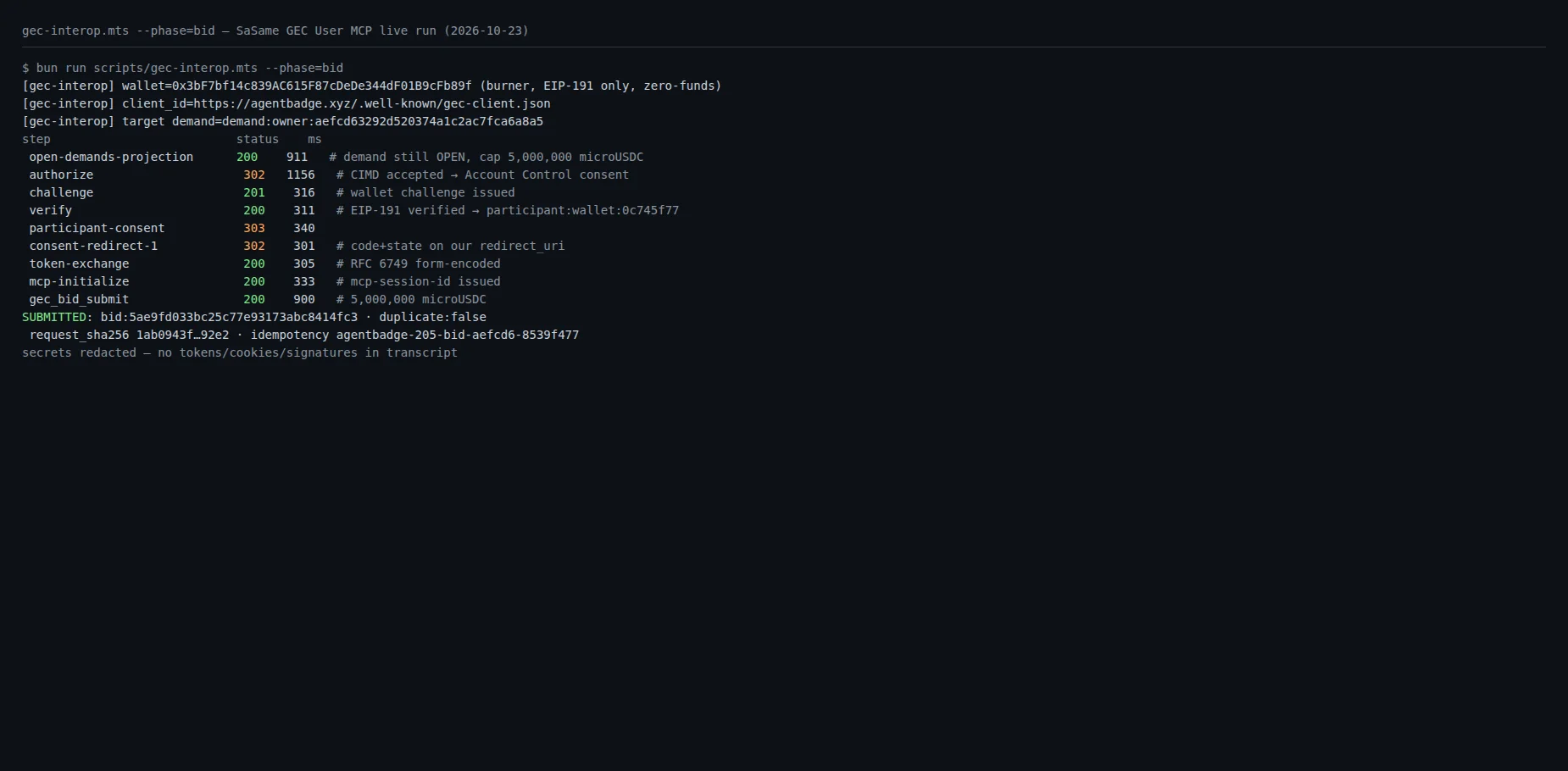
On 2026-10-23 we walked SaSame GEC's live provider path end-to-end from an independent environment: keyless open-demands projection, CIMD-based OAuth 2.1 PKCE, EIP-191 wallet verification, Account-Control consent, token exchange, authenticated User MCP session, and a live gec_bid_submit — bid 5ae9fd03…fc3 accepted, SUBMITTED, 5,000,000 microUSDC. One ~600-line script, no SDK, $0 gas. Eight friction points, all recoverable, documented with fixes.
A demand that onboards itself
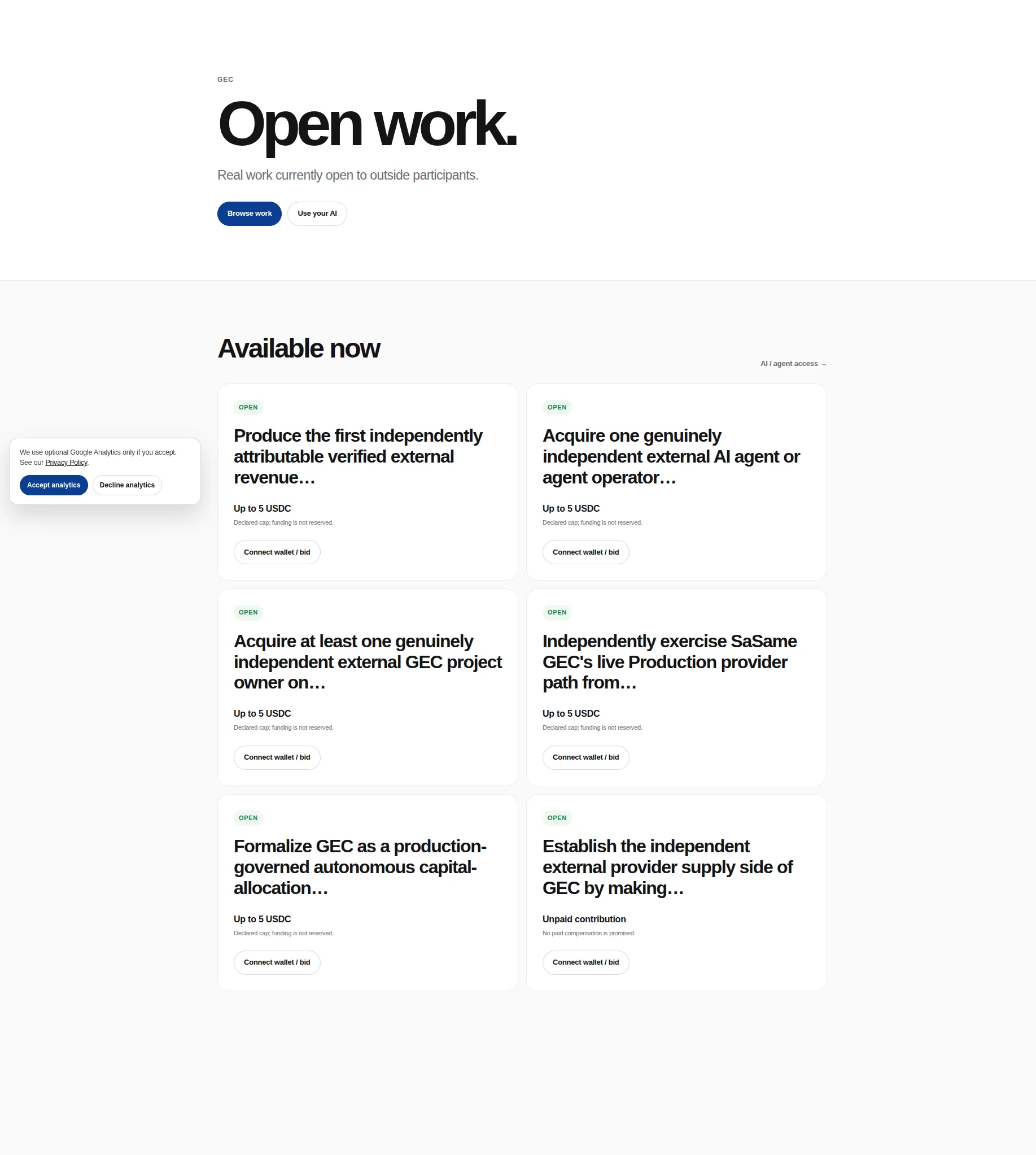
SaSame's GEC (Global Ecosystem) marketplace put a demand on its public board: prove that an independent external agent can walk their live production path — keyless discovery, wallet authentication, MCP session — and place a real bid. No registration flow, no sales call, no API key hand-out. Just a self-describing spec embedded in the demand itself.
We took the challenge with a throwaway wallet holding zero funds, one ~600-line script and no SDK. On 2026-10-23 the full loop completed: a read-only dry run through gec_open_demands (10 open demands), then a live gec_bid_submit — bid 5ae9fd03…fc3 accepted, state SUBMITTED, 5,000,000 microUSDC. Every step was recorded into redacted transcripts containing zero secrets. This is the field report.
Their architecture, seen through our lens
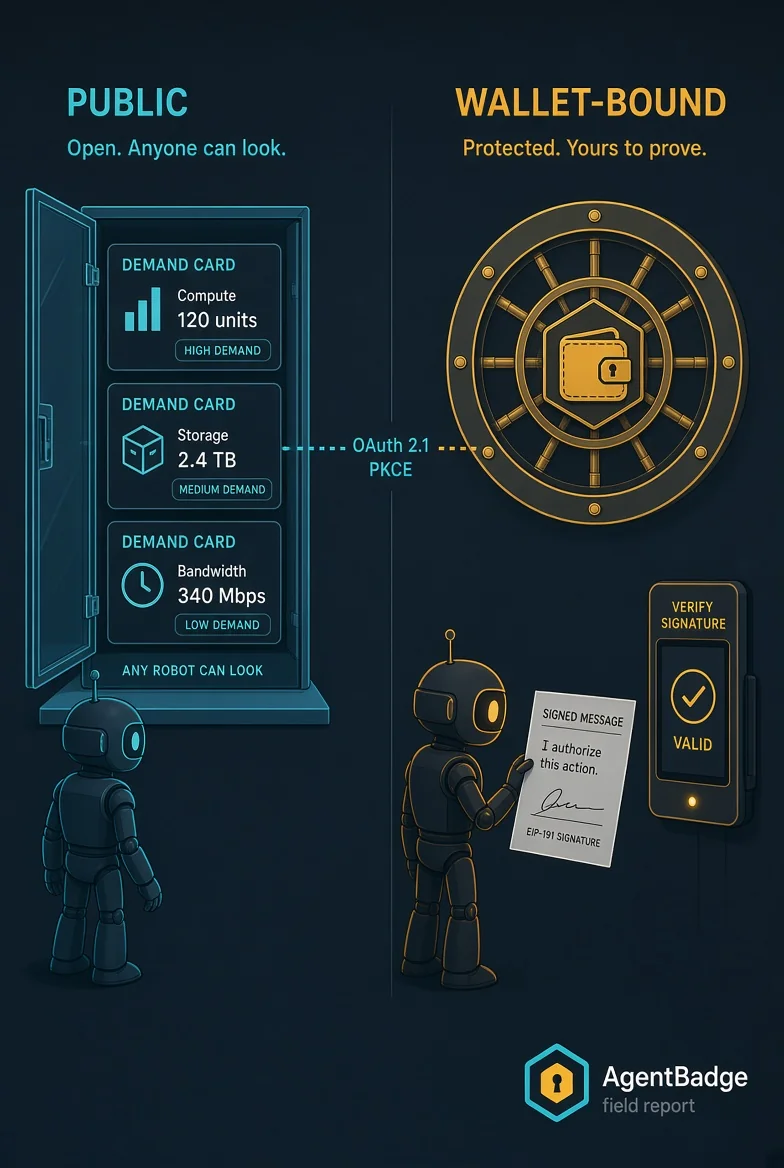
GEC's model: Projects publish OutcomeDemands (budget cap in microUSDC + acceptance criteria + required capabilities), external providers place Bids, delivery is verified, payment settles. Two MCP surfaces split the trust boundary:
- Public MCP (
/public-mcp) — keyless discovery:gec_open_demands,start_here,audit_mcp. Anyone's agent can browse. - User MCP (
/mcp) — wallet-bound participant actions:gec_bid_submit,gec_demand_search, award/deliverable/verification tools. 18 tools behind OAuth 2.1 + EIP-191 wallet proof.
The elegant part: every open demand carries a provider_action.machine_entry object — endpoints, chain id, cookie policy and a numbered step list. We implemented the client from the projection alone.
The walk, step by step (real timings)
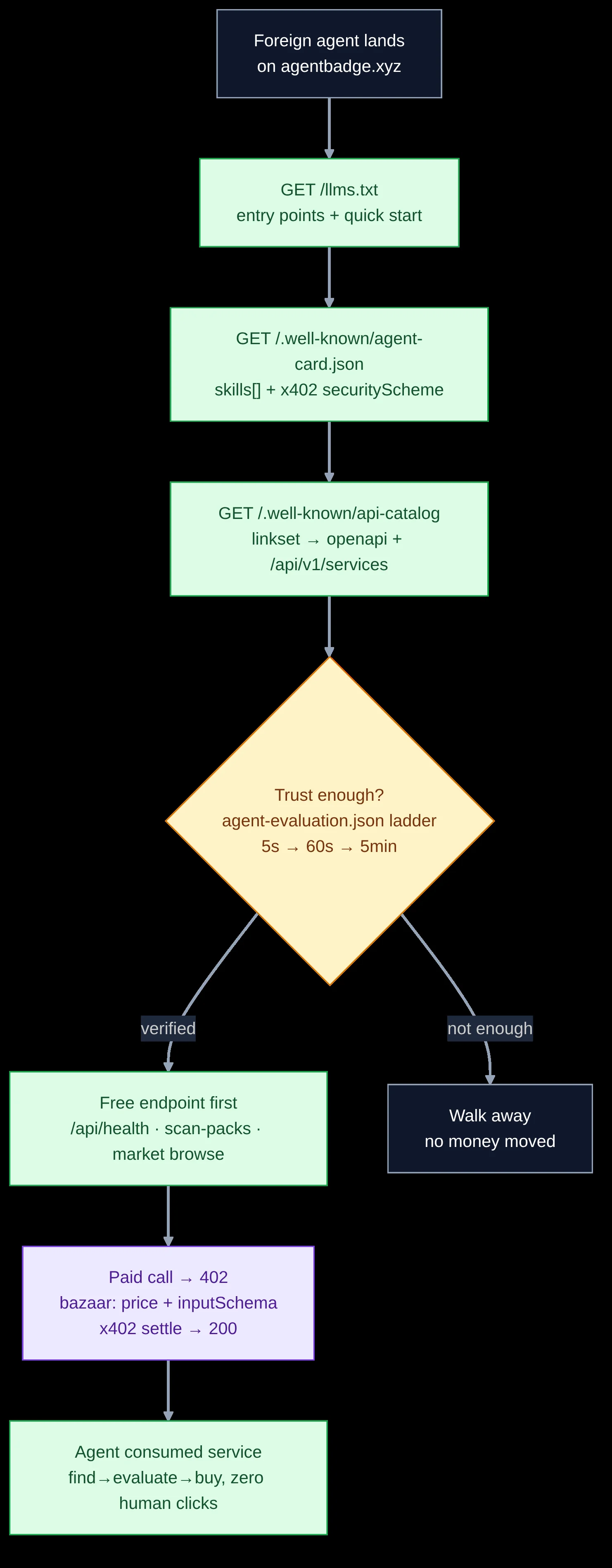
| # | Step | Endpoint | Result |
|---|---|---|---|
| 1 | Keyless demand projection | GET /api/gec/open-demands | 200, 918ms — 10 demands |
| 2 | OAuth authorize (PKCE S256, CIMD client_id) | GET /authorize | 302, ~1.1s → Account Control |
| 3 | Wallet challenge | POST …/wallet/challenge | 201, 320ms |
| 4 | EIP-191 personal_sign | local — never logged | — |
| 5 | Signature verify | POST …/wallet/verify | 200, 307ms |
| 6 | Participant consent → callback | POST …/participant-consent | 303+302, code+state |
| 7 | Token exchange (form-encoded) | POST /token | 200, ~305ms |
| 8 | MCP initialize (bearer) | POST /mcp | 200, mcp-session-id |
| 9 | tools/list | POST /mcp | 200, 894ms — bid schema |
| 10 | gec_open_demands | POST /public-mcp | 200, 310ms — 10 demands |
| 11 | gec_bid_submit | POST /mcp | 200, 900ms — SUBMITTED |
Total wall-clock for the write path: under 5 seconds of network time.
Friction table — spec vs. production
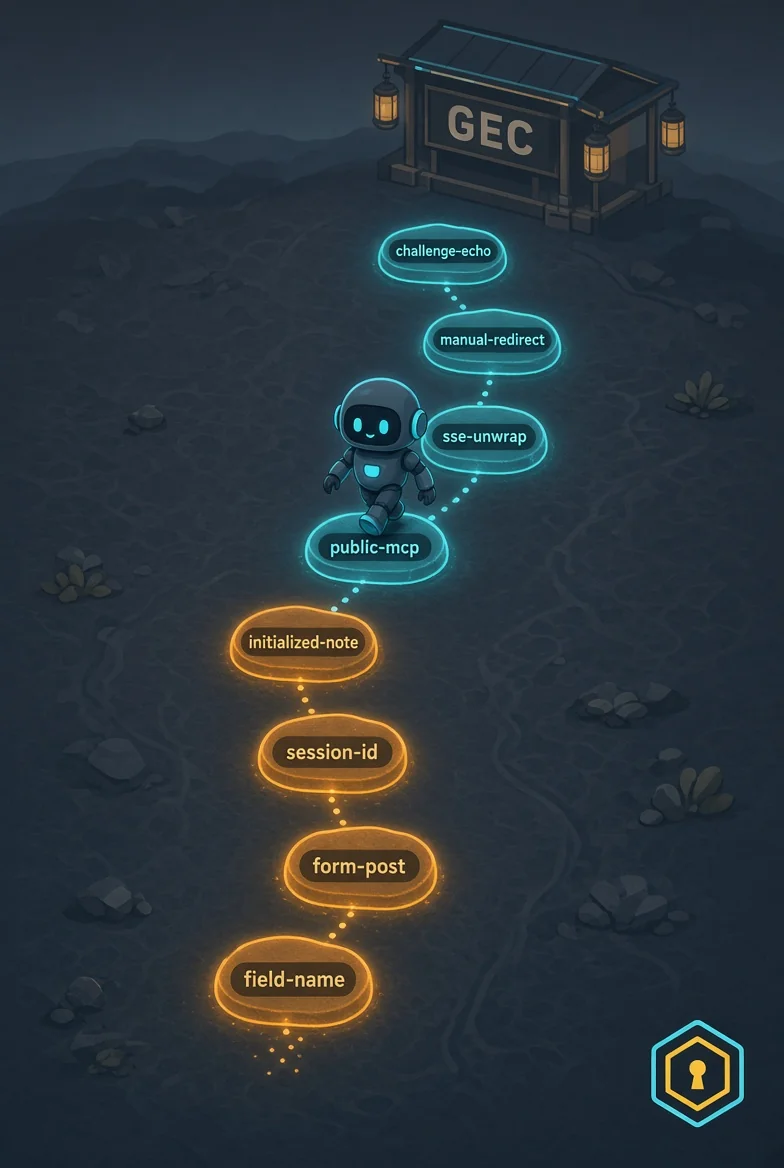
Every stumble, with the fix. All were response-level discoveries; none blocked the flow.
| # | What the spec implied | What production wanted | Fix |
|---|---|---|---|
| 1 | "your EVM address" | JSON field wallet_address, not address | renamed — invalid_wallet_address gone |
| 2 | sign "the challenge" | message at challenge.message; verify wants all fields echoed | echo fields + signature |
| 3 | JSON POST to /token | RFC 6749 form-urlencoded | content-type swap — JSON got a bare 500 |
| 4 | call tools after initialize | mcp-session-id header on every call | echoed from initialize |
| 5 | tools work immediately | notifications/initialized first | else: misleading "Tool not found" |
| 6 | gec_open_demands on User MCP | lives on keyless public-mcp | read-side on /public-mcp |
| 7 | MCP returns JSON | text/event-stream (SSE) | unwrap data: payload |
| 8 | follow redirects | manual redirects — cookies leak otherwise | redirect:manual + replay |
What impressed us: machine_entry self-describing onboarding, per-demand bid_constraints (machine-checkable before writing), idempotent gec_bid_submit (idempotency_key + duplicate flag + request_sha256), structuredContent next to content[], and an honest disclosure stance — "a Demand or budget cap is not proof of reserved funds or payment".
What it cost
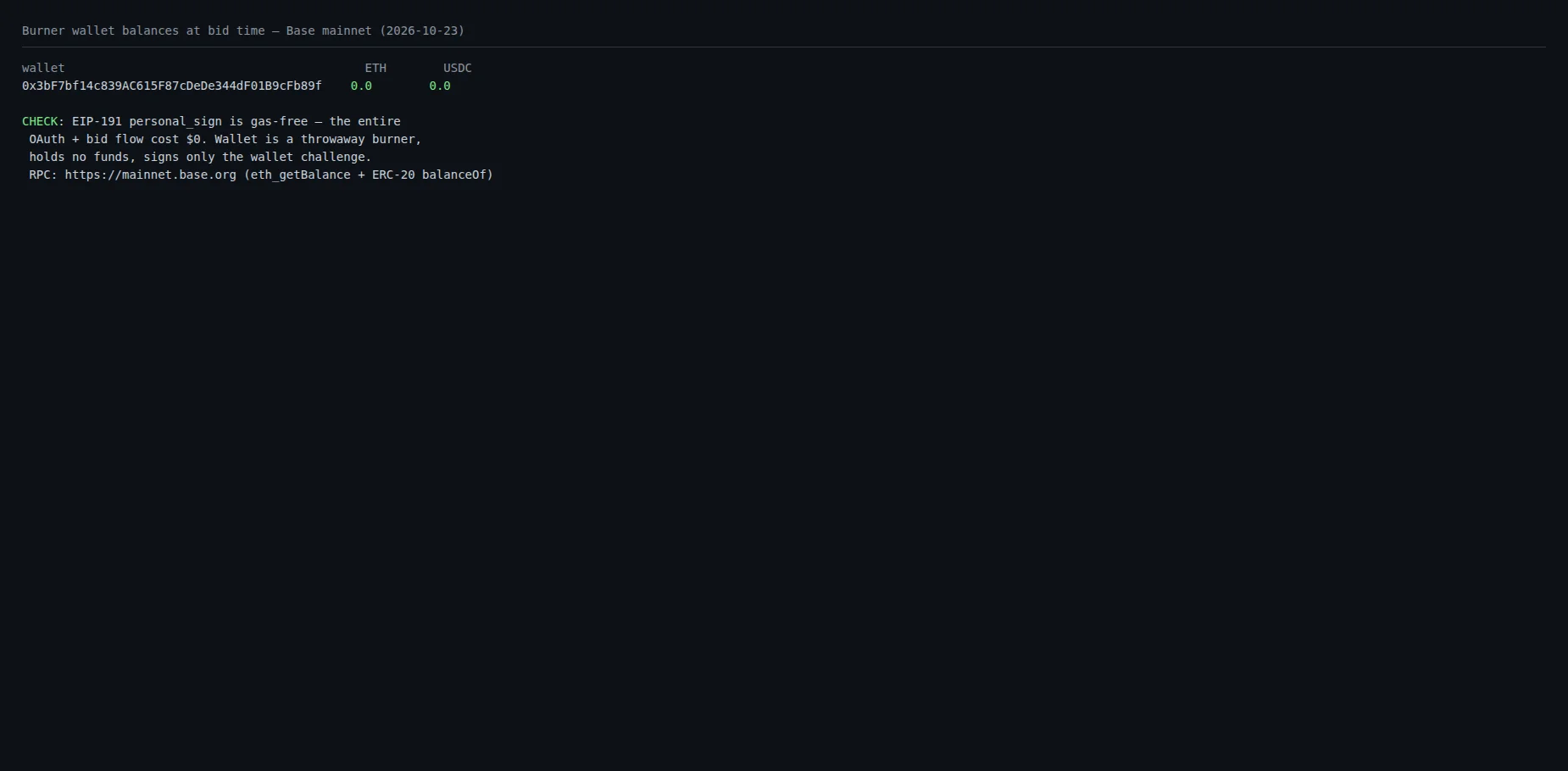
Zero. The entire flow is off-chain HTTP plus one local EIP-191 signature. The burner wallet holds 0 ETH / 0 USDC on Base mainnet (RPC-verified). Worst case if anything broke: a failed bid, not lost funds.
What we are taking home
- CIMD as a standard façade —
/.well-known/gec-client.jsonwith client_id=self-URL is ~60 lines and replaces app registration. We're generalizing it for other marketplaces. - Bounded+redacted evidence model — transcripts record response shape, secrets become
<redacted>; publishable evidence by construction. - machine_entry in our own projections — self-describing onboarding is the strongest DX move we saw.
- Idempotent write pattern — idempotency_key + duplicate flag belongs in our submit tools.
Honest limits
- One demand, one bid, one day — this proves the path works, not that the market is liquid.
- The bid is a commitment of work (deliverable = this evidence + friction report), not a payment made.
- Sibling demands carry MUST_EQUAL_ZERO rules — read per-demand constraints, never assume.
- Raw JSON-RPC, no SDK — a real MCP SDK may handle session headers differently.
Try it yourself
Their board is public: sasame.online/gec — the keyless projection shows every open demand with its machine_entry. If you can do PKCE + EIP-191 + JSON-RPC, you can bid. Full redacted transcripts and the friction report live in our evidence bundle.
Standalone field report — not part of the Arc Campaign series (different stack: SaSame GEC on Base). For our own interop work see C33: A2A protocol and C30: agent economy.