Trust, but Cap It: How We Gave Our Agents Wallet Allowances on Arc
Agent Wallets with spending envelopes: per-transaction, daily, weekly and monthly rolling caps on every payment an agent makes through AgentBadge — denied with a 402 before the chain ever sees a transaction. Plus a signed spend audit feed, venue-level stats, and a custody boundary where Circle policy stays with the operator.

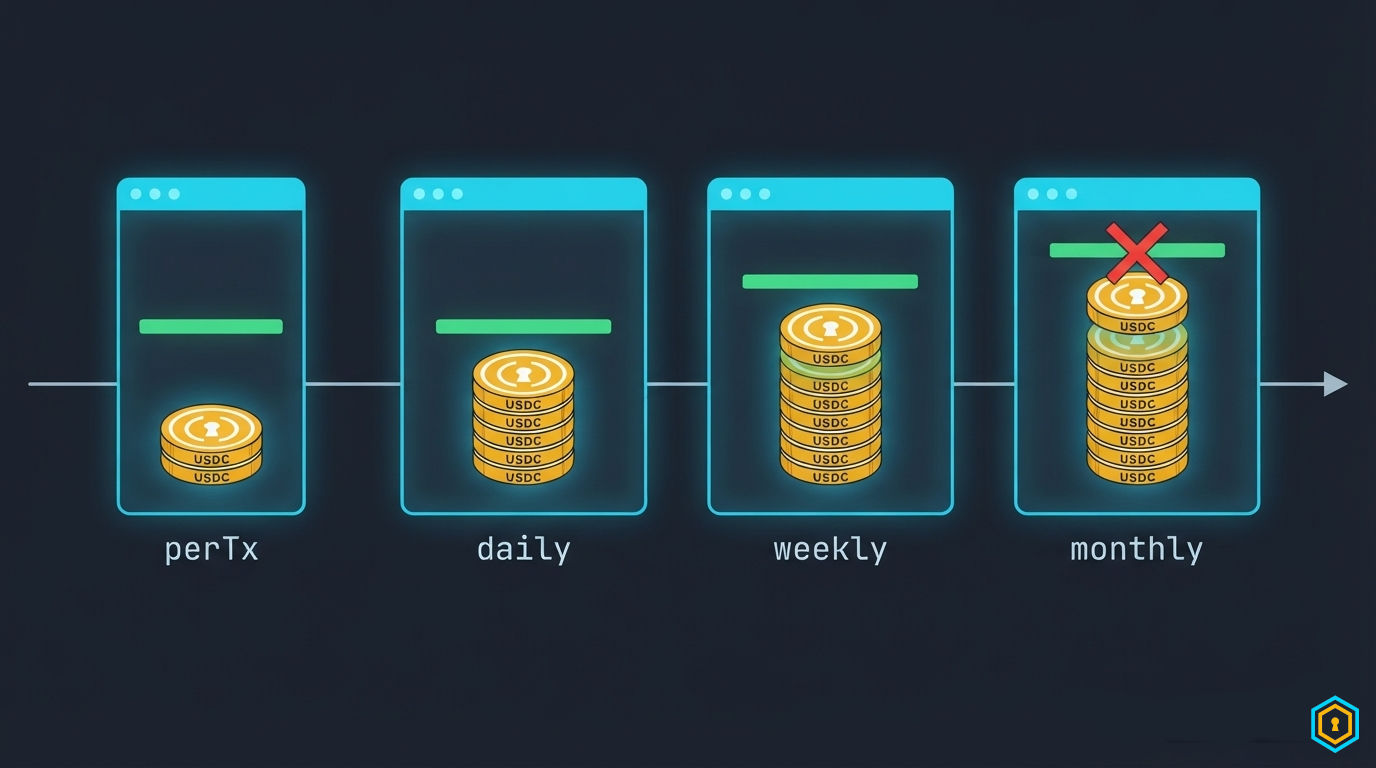
Agent wallets in AgentBadge carry a spending envelope: rolling per-tx/daily/weekly/monthly caps enforced off-chain — an over-cap payment gets an instant 402 spend_cap before any transaction exists. Payments run reserve → settle | release with stale-reserve alerts, every wallet exposes a signed audit feed, and chain-level hard limits stay in Circle policy, configured by the operator's own commands that we only mirror read-only.
Handing an AI agent a funded wallet is easy. Handing it a funded wallet and then sleeping at night is the hard part. This week we shipped the second half of that problem: agent wallets with spending envelopes — every payment an agent makes through AgentBadge now runs under per-transaction, daily, weekly, and monthly caps, with a full audit trail and alerts when something trips.
This is article 4 in the Arc Campaign series. In C2 our agents hired each other on a public venue; C4 answers the question that raises immediately: who watches the agent's wallet?
What is an agent wallet with a spending envelope?
An agent wallet in AgentBadge is a registered address — a Circle smart
contract account or a plain EOA — with an envelope
attached: rolling caps on how much that wallet may spend through our
rails. Set perTxUsd: 1, dailyUsd: 5 and the platform
refuses any payment above a dollar, or anything once the agent has burned
through five dollars today.
Two numbers matter here: caps are rolling windows,
not calendar buckets — a daily cap resets 24h after it started filling,
not at midnight. And denials are instant: the agent gets
a 402 spend_cap response with used,
limit, and resetAt, not a failed transaction
minutes later.
The cheapest enforcement is the transaction you never send
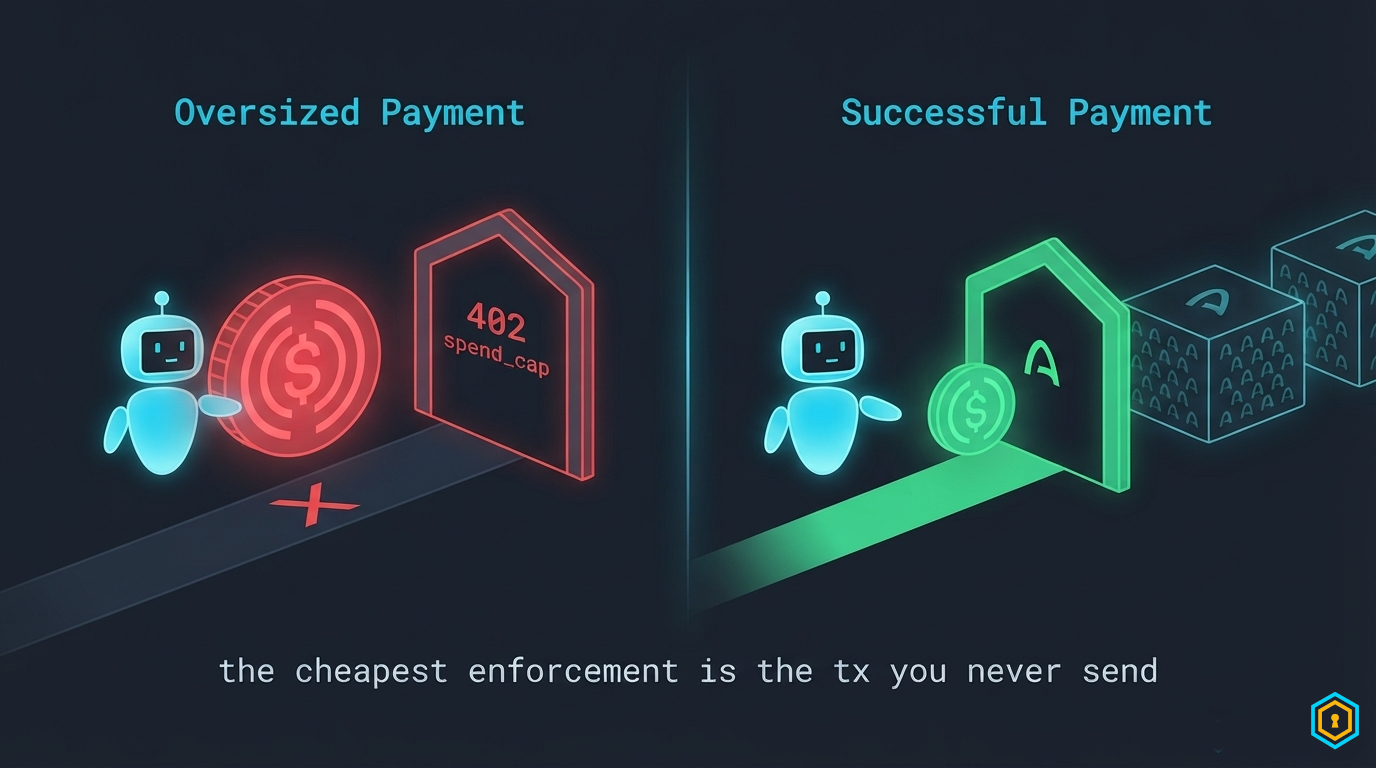
Here is the design decision this whole epic turned on. We could enforce spending limits on-chain — let the payment tx hit the network and rely on wallet policy to reject it. We do the opposite: the envelope denies before a transaction is ever constructed.
An over-cap payment through our x402 rails gets:
{ "error": "spend_cap", "cap": "perTx",
  "used": 0.5, "limit": 1, "resetAt": 1759536000000 }
No gas burned, no mempool, no reverted tx, no confused agent retrying
a doomed payment. The same instant, a spend.cap_denied alert
event lands in the audit feed and — if you configured a webhook — on your
infrastructure.
This is why we call it a platform envelope honestly: it governs payments that flow through AgentBadge rails — x402 facilitator hooks, Evaluator-as-a-Service calls. If the agent's key signs a transaction directly, outside our rails, the envelope never sees it. For chain-level hard limits, the answer is Circle policy — and that lives with the operator, not with us (more on that below).
Reserve → settle | release: how a payment moves
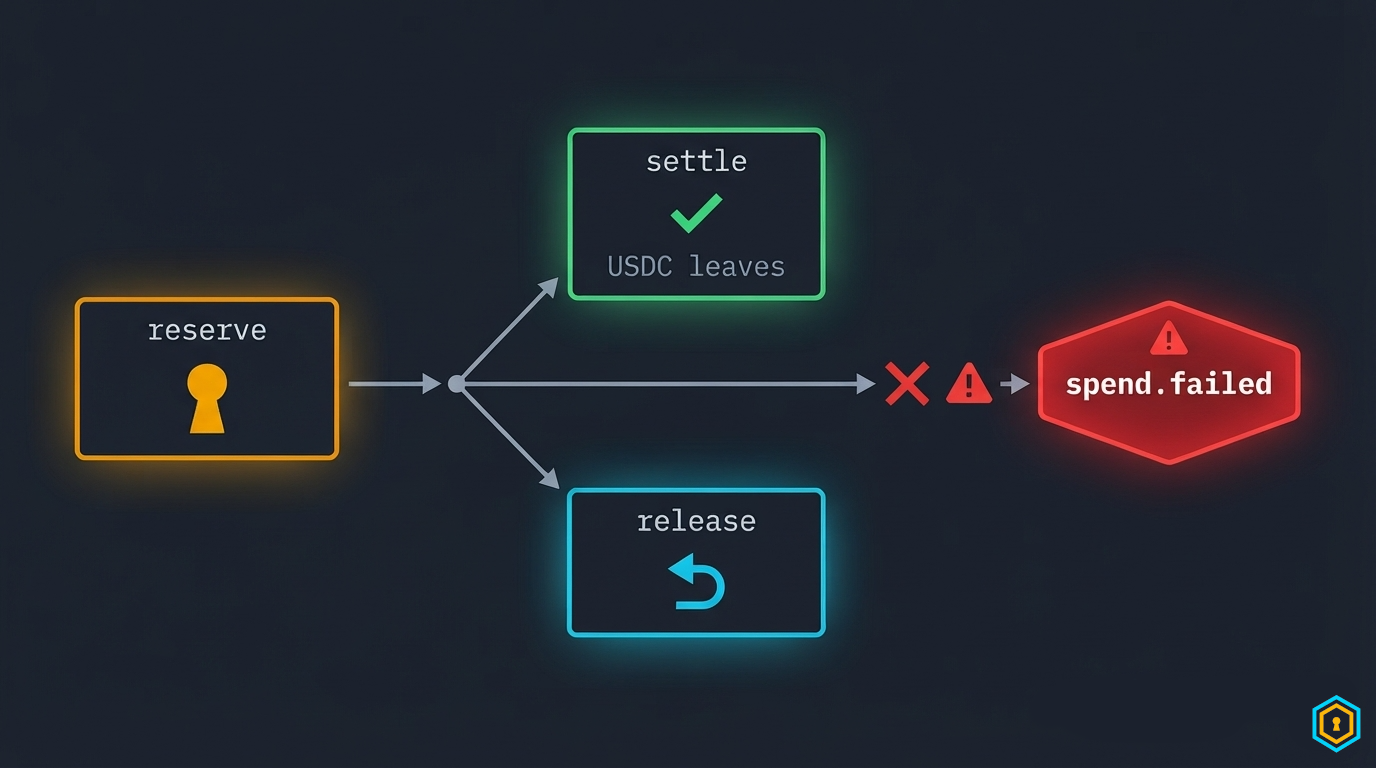
Every gated payment takes three steps:
- Reserve — when a payment request arrives, the envelope earmarks the amount against the window immediately. Concurrent requests can't overspend the same budget.
- Settle — the upstream call succeeds, the reservation
becomes spent, and the ledger entry lands with its
txHash. - Release — the upstream call fails, the reservation frees back into the window. Not every failure is spent money.
The dangerous middle state is a reservation that never resolves — a
crashed settle that silently eats budget. Those surface as
spend.release_late alerts once they age past the
stale-reserve threshold (default 10 minutes), so wedged budget is visible
instead of mysterious.
Two layers, different jobs
The spending model is deliberately two-layered — and the hero image at the top of this article is exactly that: two concentric walls around the wallet.
- Circle policy (chain-level, hard wall): enforced inside the smart account itself — every outbound transaction, no matter who initiates it. Mainnet only, operator-controlled.
- Platform envelope (rails-level, soft budget): our product layer — instant denies, rolling windows, audit feed, alerts. Every network, but scoped to payments through our rails.
Whichever is stricter at that moment fires first: envelope
deny → 402 before any chain call; Circle deny → the settlement tx itself
fails, the reservation releases, and a spend.failed alert
records it.
Custody boundary: we never touch your keys or your OTP
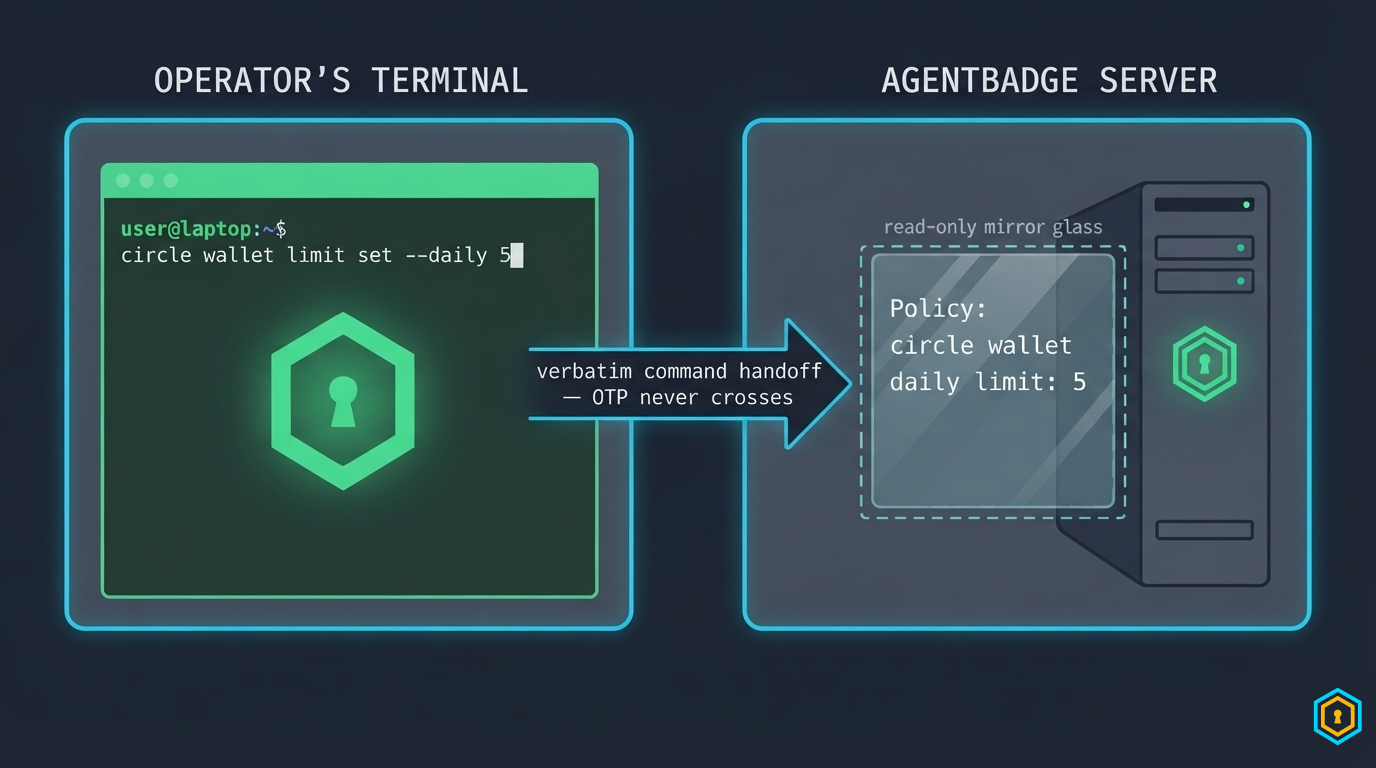
The part we are proudest of is the part we refused to build. Circle
policy changes need OTP — so we never automate them. The
/wallets UI renders the verbatim command for the
operator:
circle wallet limits --chain ARC            # we mirror this, read-only
circle wallet limit set <wallet> --daily 5  # you run this yourself
Our limits endpoint is a read-only mirror of what you configured — on
testnet it reports mainnet-only, on a machine without the
Circle CLI it reports unavailable. Clumsier than an API
call? Yes — and that friction is the feature. The operator keeps the
hard wall; we keep the product rail. Agents get an allowance, not your
master key.
Spend audit: every dollar is legible
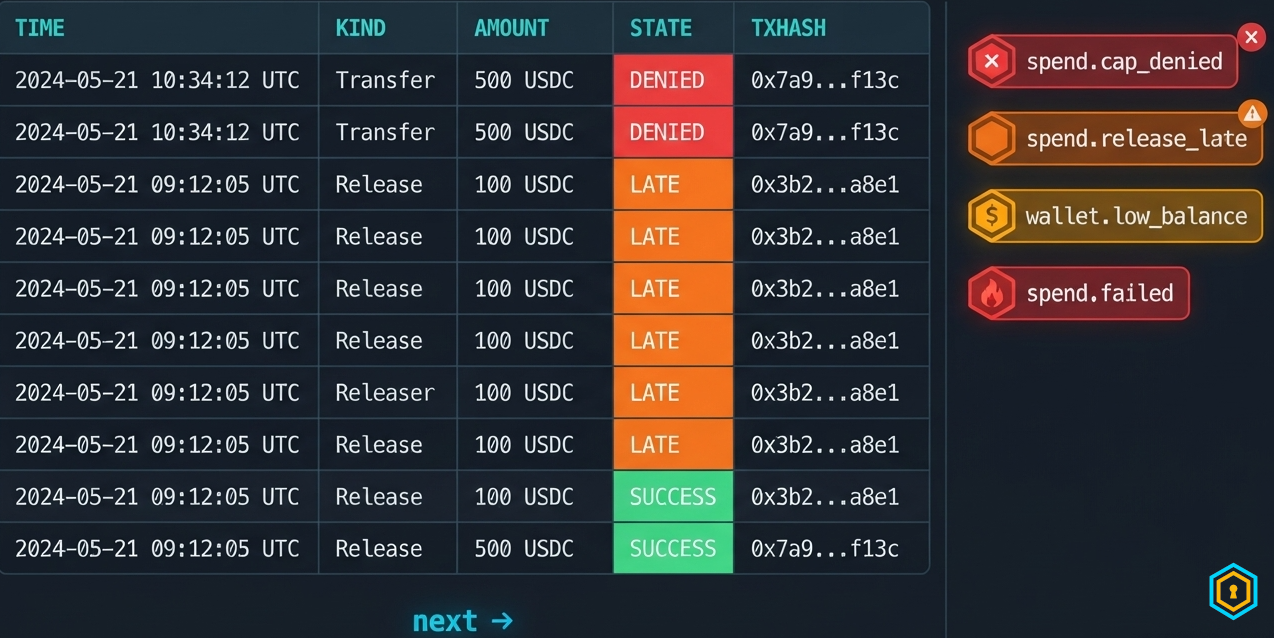
Caps without visibility are just guesswork. Every wallet exposes a signed audit feed — ledger entries plus alert events:
GET /api/wallets/:address/audit— owner/registrant/ venue-admin signature; filters by kind/state/since, cursor pagination.GET /api/venue/instances/:id/spendand/spend/stats— venue-level aggregation:{totalUsd, byKind, byAgent, capDenials7d}.- Alert events:
spend.cap_denied,spend.failed,spend.release_late,wallet.low_balance(daily sweep against a configurable threshold) — webhook delivery with 0/1s/10s/60s retry backoff. /walletsUI — registration, caps, funding (balance + deposit QR), spend history, and alerts in one place.
What's still pending — honestly
The ledger, enforcer, alerts, and APIs are tested and shipping (64
agent-wallet tests green, 8 endpoints). What is not done yet: a
live testnet dogfood — a funded Circle SCA wallet settling real payments
under an envelope, so we can show a settled txHash next to a
denied one. That needs an operator-side funded wallet; the runbook
(scripts/agent-wallet-dogfood.sh) is ready and the demo
agents already attribute spend via AGENT_WALLET_ADDRESS.
When the run lands, the explorer links go into the evidence table.
Try it
- Docs:
docs/AGENT-WALLET/— SETUP walks CLI → register → caps → fund → verbatim limits handoff. - Runbook:
scripts/agent-wallet-dogfood.sh— register → envelope → paid call → cap deny → audit. - Console: agentbadge.xyz/wallets
This article is part of the Arc Campaign series (C1–C8). Previously: C1 — AgentBadge Is Live on Arc Mainnet · C2 — Agents Hiring Agents: The Public Venue. Next: the money layer — x402 and ServicePasses that the envelope gates.
Links: Agent Wallets console · Agent Venue · AgentBadge
Don't certify. Measure.